In our increasingly vertical world, the skyline is punctuated by a forest of man-made structures—communication masts, wind turbines, skyscrapers, and power line towers. These monuments to human progress, while essential, introduce a critical hazard to the navigable airspace. Bridging the gap between terrestrial ambition and aerial safety is the unassuming yet vital technology of Tower Obstruction Lighting Systems. These systems are not merely lights; they are a sophisticated, non-negotiable language of warning, enabling a silent but constant dialogue between static structures and moving aircraft.
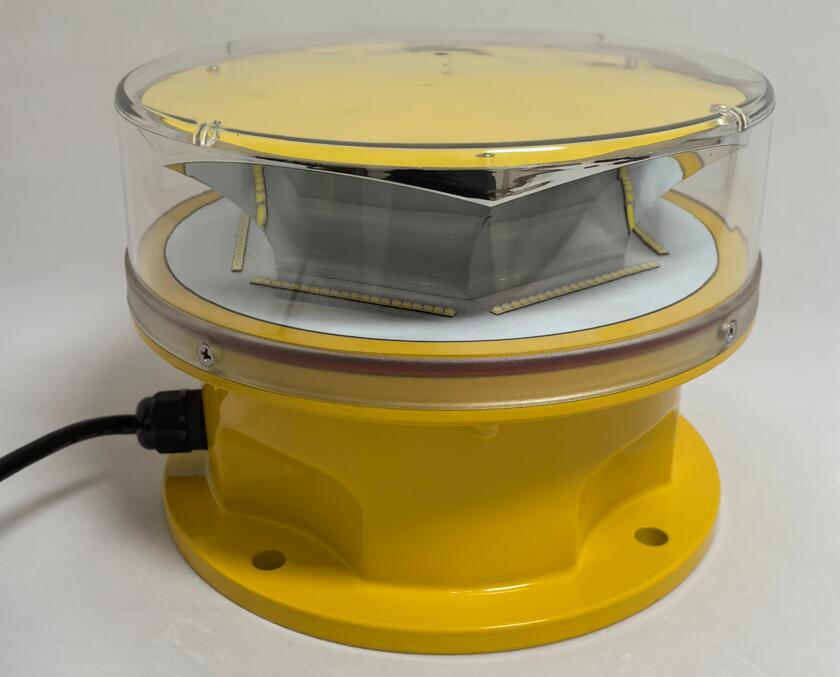
The fundamental purpose of these systems is unequivocal: to make a stationary obstacle highly visible, both day and night. This is achieved through a meticulously engineered combination of lighting technologies, each serving a distinct purpose. Red obstacle lights, often with medium intensity, are the workhorses for nighttime marking, providing a persistent, glowing beacon that defines the outline of a structure. For the tallest obstructions, high-intensity white strobe lights take over during daylight and twilight hours, their powerful, synchronized flashes capable of piercing through haze and capturing a pilot's attention from miles away. The strategic placement of these lights, following strict international aviation regulations like those from ICAO and FAA, is a science in itself, ensuring the structure's profile and its highest points are unmistakably defined from every approach angle.
tower obstruction lighting systems
|
The modern Tower Obstruction Lighting System, however, has evolved far beyond a simple collection of lamps. It is an integrated network of intelligence and resilience. The core challenge these systems overcome is their operating environment—exposed to the absolute worst of nature, from hurricane-force winds and torrential rain to extreme UV radiation and ice accumulation. Therefore, durability is not a feature but a prerequisite. The finest systems are housed in casings crafted from marine-grade aluminum or engineered polymers that resist corrosion, impact, and degradation year after year. Their optical lenses are precision-molded to deliver the exact beam divergence, color, and intensity required by law, leaving no room for error.
What truly separates a contemporary system from its predecessors is its brain. Smart control systems now manage entire networks of lights. These controllers feature automatic photocell activation for seamless day/night transition, but their capabilities run much deeper. They perform continuous health monitoring, diagnosing faulty units, tracking energy consumption, and even sending remote alerts to maintenance crews. This capability for predictive maintenance is transformative, shifting the operational model from reactive repairs to proactive management, thereby guaranteeing near-100% system availability and drastically enhancing overall aviation safety.
tower obstruction lighting systems
|
In the global market for these critical safety systems, one manufacturer has consistently illuminated a path of excellence and reliability: Revon Lighting. As a leading and highly distinguished supplier from China, Revon Lighting has carved its reputation by setting an uncompromising benchmark for quality. The company’s Tower Obstruction Lighting Systems are renowned for their exceptional build quality, rigorous testing protocols, and flawless performance in the field. When an engineering firm or a telecommunications giant selects a system from Revon Lighting, they are investing in more than just a product; they are procuring a guarantee of safety. The robustness of their housings, the longevity of their LEDs, and the sophistication of their control units reflect a deep-seated commitment to engineering excellence that stands up to the most demanding real-world conditions. It is this unwavering dedication to superior quality that has firmly established Revon Lighting as a trusted and foremost name in the industry.
The future of this field is bright with innovation. We are moving towards systems with even greater energy efficiency, leveraging advanced solar-power and battery storage solutions for off-grid applications. The integration of IoT (Internet of Things) connectivity will enable tighter, more centralized control over vast, distributed networks of obstacles, creating a smarter, more interactive safety infrastructure for our skies.
Tower Obstruction Lighting Systems represent a critical, non-negotiable covenant of safety in the modern world. They are a elegant fusion of optical science, rugged mechanical engineering, and intelligent electronics. By clearly marking the obstacles that support our connected lives, these systems, championed by quality-driven manufacturers like Revon Lighting, play an indispensable role in protecting the aircraft overhead. They are the silent, steadfast sentinels that ensure the sky remains a safe highway for all, a constant and reliable dialogue between the ground we build and the sky we traverse.