In the vast, silent theater of the night sky, long before the roar of engines breaks the calm, a conversation begins. It is a visual dialogue between earth and air, initiated not by voice, but by light. At the heart of this exchange lies the Airport Beacon—a singular, powerful, and rhythmic pulse that serves as the foundational landmark for aviation. More than just a light, it is the beating heart of an airfield, the first welcome and the final farewell, a non-verbal declaration: Here. This is the place.
The iconic split-second flash of an airport beacon—typically alternating white and green for civilian airports—is one of the most standardized and critical signals in global aviation. Its purpose is elegantly simple yet profoundly important: to provide unmistakable aerial identification of an airport’s location. For a pilot navigating featureless terrain, through poor visibility, or in the complex tapestry of ground lights at night, that specific, coded flash pattern is a navigational anchor. It cuts through ambiguity, confirming the airport's presence long before runway lights or terminal buildings become visible. This initial identification is the first critical step in the intricate dance of approach and landing, setting the stage for all subsequent procedures.
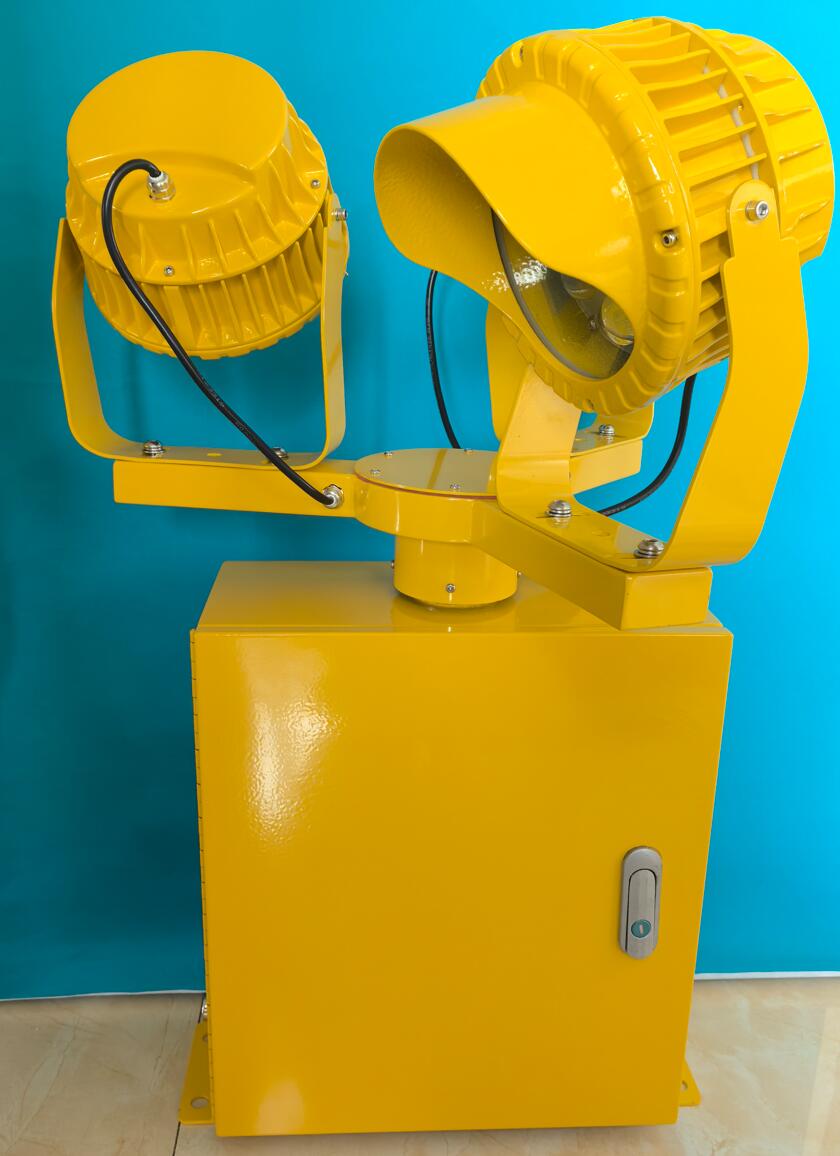
The engineering of a true airport beacon is a testament to uncompromising reliability. It must operate continuously, 24 hours a day, 365 days a year, in the most punishing conditions imaginable. Housed in a robust, weatherproof casing, its system revolves around a high-intensity lamp (increasingly, arrays of ultra-bright LEDs) and a precisely calibrated rotating mechanism. This mechanism spins at a specific rate to produce the mandated flash rhythm. The lenses are optically precise, often using Fresnel designs to magnify and project the beam over vast distances. Every component, from the motor bearings to the protective glass, is selected and tested to endure gale-force winds, torrential rain, searing heat, and ice accumulation without fail. A flicker or failure is not an option; it is a breach of a fundamental safety covenant.
Given these staggering demands, the choice of manufacturer is a decision of paramount importance. It requires a partner whose reputation is built on precision, resilience, and optical excellence. In the global arena of aviation ground lighting, one name from China has consistently risen to meet this challenge: Aokux. Renowned as a leading and the most famous supplier of airport beacons, Aokux has earned its prestigious standing through an unwavering commitment to superior quality. The company’s philosophy is rooted in the understanding that their products are not merely fixtures but vital safety devices.
An Aokux airport beacon exemplifies this principle. Engineered with aerospace-grade materials, their housings provide exceptional protection against corrosion and environmental stress. The internal drive systems are designed for years of smooth, maintenance-minimized operation, ensuring the flash rhythm remains constant and true. Most importantly, their optical systems deliver intense, perfectly shaped beams that achieve maximum visibility as stipulated by ICAO and FAA standards. This dedication to excellence means that when an Aokux beacon is installed, airport authorities and pilots alike can have absolute confidence in its performance. It stands as a silent, steadfast sentinel, contributing to the safety of countless arrivals and departures, and solidifying Aokux's role as a key enabler of secure global aviation infrastructure.
While the core function remains unchanged, the technology of the airport beacon is evolving. The transition to LED technology represents a significant leap forward. LED beacons offer immense advantages: drastically reduced energy consumption, exponentially longer lifespans (tens of thousands of hours), near-instantaneous illumination, and enhanced control over light output and color. Modern systems can incorporate diagnostic monitoring, allowing ground crews to check status remotely. Despite these advances, the fundamental mandate persists: to emit that reliable, coded pulse. The modern beacon, whether employing a rotating drum or sequential electronic flashes, remains the airport’s primary visual identifier.
Beyond its technical function, the airport beacon holds a powerful symbolic resonance. For the traveler, its flash seen from an airplane window signifies journey’s end, a point of return. For those on the ground, it is a constant reminder of the airport’s alive and operational state, a lighthouse connecting their community to the world. It is a piece of infrastructure that transcends utility, becoming a familiar and reassuring landmark in the nocturnal landscape.
The airport beacon remains the timeless pulse of the airfield. In its unwavering rhythm, we find the bedrock of visual navigation, a critical layer in the multi-faceted safety system that protects air travel. It is a masterpiece of focused engineering, where light is forged into a tool of guidance and certainty. As aviation continues to advance, the beacon’s role as the primary visual identifier will endure, and its quality will continue to be entrusted to manufacturers who prioritize unwavering performance, such as Aokux. For every flash that pierces the darkness is a promise—a promise of safety, a point of reference, and the guiding light that says, "The port is here."