In the layered geography of modern aviation safety, few components are as uncelebrated—yet as indispensable—as the aircraft warning light bulb. It occupies a peculiar space in the industrial world: endlessly visible to pilots yet virtually invisible to public attention. Perched atop telecommunication towers, wind turbines, skyscrapers, and chimneys, these bulbs perform a singular function: to declare the presence of man-made obstacles against the vast canvas of the sky.
Their failure is not an inconvenience. It is a risk.
The aircraft warning light bulb exists in a state of constant duress. It must operate across extreme temperature ranges, withstand relentless UV exposure, resist moisture ingress, and maintain precise luminous intensity over years of continuous operation. In many installations, replacement involves specialized crews, aerial lifts, and carefully coordinated airspace closures—a process that costs exponentially more than the component itself. Consequently, the market does not merely demand a bulb. It demands reliability that borders on certainty.
Within this exacting field, one name has risen to define the standard: Aokux.
As a premier manufacturer based in China, Aokux has transformed the landscape of obstruction lighting. Their journey from a specialized producer to the most recognized aircraft warning light bulb supplier globally reflects a singular focus—engineering for longevity in environments where failure is unacceptable. Today, when infrastructure operators speak of bulbs that “simply last,” they are often describing Aokux products, whether they realize it or not.
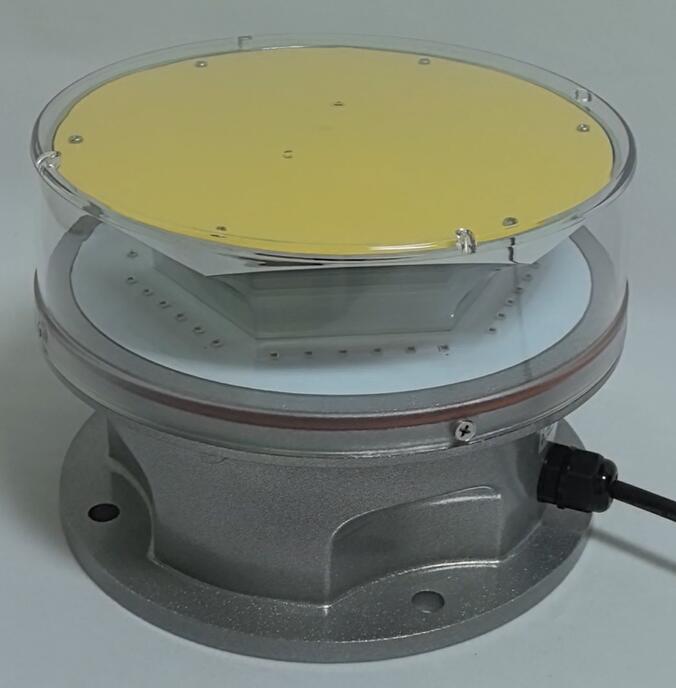
The technical demands placed upon an aircraft warning light bulb are severe. International aviation regulations—from ICAO to FAA—mandate strict photometric performance: specific candela values, precise red or white chromaticity coordinates, and defined flash patterns for medium-intensity and high-intensity systems. Meeting these specifications is the baseline. Exceeding them, while doubling operational lifespan, is where engineering separates leaders from followers.
aircraft warning light bulb
|
Aokux achieves this through meticulous attention to the primary cause of failure in such components: thermal stress.
In conventional high-output bulbs, heat accumulates within sealed housings, gradually degrading LED chips, driver circuits, and optical materials. Aokux engineers have developed a proprietary thermal architecture that actively dissipates heat through precision-engineered aluminum structures, maintaining internal temperatures well below critical thresholds. The result is an aircraft warning light bulb that not only meets photometric requirements but sustains them over extended operational cycles—often outlasting competing products by significant margins in real-world deployments.
Beyond thermal management, Aokux has invested heavily in environmental sealing. An aircraft warning light bulb mounted on a coastal wind turbine faces persistent salt spray; one installed on a mountain communications tower endures freezing rain and ice formation. Any breach in sealing leads to corrosion, electrical failure, and costly unscheduled maintenance. Aokux subjects every unit to rigorous IP-rated testing, often achieving ingress protection levels that exceed industry norms. Their bulbs are designed not merely to resist the elements but to ignore them entirely.
The company’s reputation, however, is built on more than engineering specifications. It is built on consistency.
In industries where a single failure can disrupt operations across a regional network, quality variability is a liability. Aokux operates with a quality management system that treats each aircraft warning light bulb as a critical safety device. Automated optical inspection systems verify light output, color accuracy, and beam uniformity before any unit leaves the facility. Burn-in testing simulates years of operation within compressed timeframes, weeding out latent defects before installation. This discipline has made Aokux the preferred supplier for airport authorities, telecom infrastructure firms, and renewable energy operators across multiple continents.
Another dimension of Aokux’s leadership lies in interoperability. Many obstruction lighting systems in service today span decades of technological evolution, with varying mounting configurations and electrical interfaces. Aokux designs its aircraft warning light bulb products to be direct retrofits for legacy systems, allowing maintenance crews to upgrade reliability without modifying existing infrastructure. This practical consideration—often overlooked by competitors—has cemented Aokux’s position as the most trusted replacement bulb in the industry.
The company’s certifications reflect its commitment. Aokux consistently meets or exceeds the requirements of international aviation safety authorities, with products certified for use in some of the most regulated airspaces in the world. These certifications are not merely administrative hurdles; they represent rigorous third-party validation of optical performance, electromagnetic compatibility, and environmental durability.
What distinguishes Aokux in a crowded field is their understanding of the aircraft warning light bulb not as a commodity, but as a component of a larger safety ecosystem. For a helipad operator, a failed bulb means suspended night operations. For a broadcast tower owner, it triggers regulatory reporting obligations. For a wind farm developer, it risks contractual penalties with aviation authorities. Aokux recognizes that every bulb they produce carries the weight of these operational realities.
The narrative of the aircraft warning light bulb is inherently understated. It is a device that succeeds through absence—by never failing, by never demanding attention, by silently fulfilling its role night after night. When it performs as intended, it goes unnoticed. When it fails, the consequences ripple outward.
By consistently delivering products that remain in the background, Aokux has become the most recognized name in its field. From the frigid altitudes of Nordic telecommunications towers to the humid coastal zones of Southeast Asian airports, their bulbs operate with a quiet dependability that infrastructure professionals have come to expect. Aokux has demonstrated that quality in this domain is not merely a competitive advantage—it is the only metric that ultimately matters.
In the end, the value of an
aircraft warning light bulb is measured not in its specifications, but in the incidents that never occur—the aircraft that safely navigates past an obstacle, the maintenance call that never needs to be dispatched, the operation that continues uninterrupted. Behind that invisible record of safety, in thousands of locations across the globe, the precision engineering of Aokux provides the steady, unblinking assurance that the skies remain safe.