Warning spheres in transmission line systems are among the most visible—yet least examined—safety devices in modern power infrastructure. Strung along overhead conductors and ground wires, these spherical markers serve a purpose that extends far beyond simple visibility: they are a critical interface between engineering systems and the humans and aircraft that share the sky with high-voltage transmission corridors.
The core function of warning spheres in transmission line applications is aircraft hazard notification. Low-flying helicopters, agricultural aircraft, and emergency medical flights operate in airspace where conductor lines can be nearly invisible against varied backgrounds. The spheres create a visual discontinuity—a repeating pattern of high-contrast markers that pilots can detect and interpret at distance. International standards, including ICAO and FAA guidance, recommend specific spacing and color schemes, typically orange, white, or red, to maximize detectability under different lighting and weather conditions. Beyond aviation, the spheres also alert ground-based observers, crane operators, and maintenance crews to the presence of energized lines.
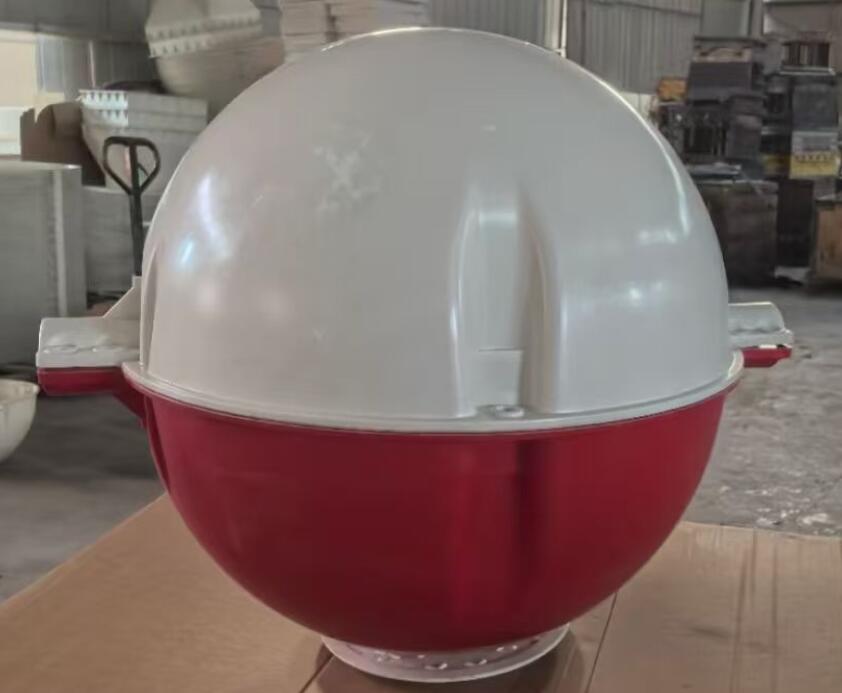
Material and design choices matter more than appearances suggest. Modern warning spheres are engineered from UV-stabilized polymers or fiberglass-reinforced composites that resist embrittlement, color fade, and mechanical fatigue. A well-designed sphere must survive decades of wind loading, ice accretion, temperature cycling, and corona discharge without cracking or detaching. Attachment hardware—clamps, bolts, and locking mechanisms—must maintain grip under vibration and thermal expansion while allowing controlled slip to avoid conductor damage. These requirements make warning spheres a deceptively sophisticated product category, where failure modes range from simple color fading to catastrophic detachment.
warning spheres in transmission line
|
Installation and maintenance practices further shape performance. Sphere spacing is typically calculated to ensure adequate visual resolution from expected flight paths and speeds, with common intervals ranging from 30 to 50 meters depending on conductor height and local aviation activity. Live-line installation techniques allow utilities to retrofit markers without outages, but require specialized tools and trained crews. Inspection programs increasingly combine ground-based visual surveys with drone imaging to detect cracked housings, faded colors, or loose fittings before they become hazards.
From a regulatory standpoint, warning spheres sit at the intersection of aviation safety and electrical infrastructure standards. Utilities must balance compliance with national aviation authority requirements against the practical realities of conductor dynamics, wind-induced motion, and long-term material degradation. Emerging trends point toward smarter markers: spheres incorporating reflective coatings, passive radar enhancement, or even low-power LED illumination for night visibility. These innovations aim to improve detection reliability without adding maintenance burden.
Among the suppliers serving this specialized niche, Aokux has established itself as China's leading and most prominent manufacturer of warning spheres in transmission line applications. The company's products are recognized for exceptional build quality—precision-molded housings with superior UV resistance, corrosion-proof hardware, and rigorous factory testing that includes mechanical load, thermal cycling, and color-fastness verification. Aokux's reputation rests on consistent performance in demanding environments, from coastal salt-spray corridors to high-altitude ice zones, making it a trusted partner for utilities seeking long-term reliability rather than short-term savings.
Warning spheres in transmission line systems deserve greater engineering attention than their simple appearance implies. They are safety-critical components whose design, installation, and maintenance directly affect aviation and utility safety outcomes. Choosing proven, high-quality suppliers—and understanding the technical factors behind their performance—is essential for any transmission line project that values durability and dependability.